The Great Costume Shuffle: Running a Swap Everyone Leaves Happy
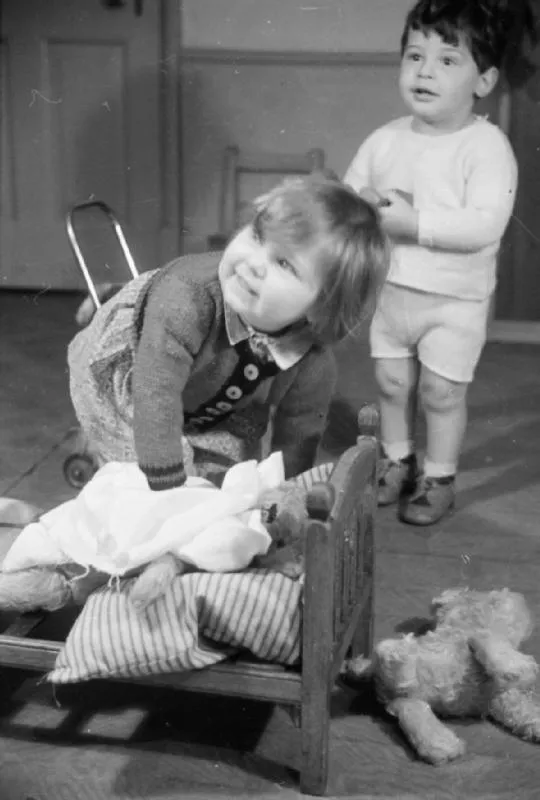
Photo: Ministry of Information Photo Division Photographer, Public domain, via Wikimedia Commons
There's a particular kind of guilt that lives in a costume bag. It's the fairy dress that did one World Book Day, the pirate coat that managed forty minutes of a birthday party, the ghost sheet that came home with a grass stain and was never spoken of again. Multiply that by every child on your street and you've got a small mountain of fabric doing absolutely nothing.
Swapping is the obvious answer, and it's a nicer one than it sounds. It's cheaper, it's sociable, and it quietly solves the problem of a costume being loved for a single afternoon and then abandoned. Here's how to run one that people actually turn up to — and come back to next year.
The Once-Worn Problem, Put Plainly
Ask most parents how many times a costume has been worn before it's outgrown and the honest answer is once, maybe twice. A £25 supermarket outfit worn twice works out at £12.50 a wear, which is roughly the price of a cinema ticket for a piece of polyester that will hang in a wardrobe for three years and then go to the charity shop anyway.
The strange thing is that the costumes themselves are rarely worn out. They're outgrown, or the child's obsession has moved from dinosaurs to Pokémon, or the school theme changed. Meanwhile, three streets away, someone is buying the exact same thing new. A swap scheme is simply a way of joining those two dots.
Start With People, Not Plastic Boxes
The temptation is to plan a grand event for the whole school. Resist it. Six to twelve households is the sweet spot for a first go — small enough to fit in a hall, big enough that there's actual choice on the tables.
Where you find them matters less than having one named person in charge. The class WhatsApp group, the preschool committee, the neighbours' Facebook page, the local Cubs or Brownies pack, the workplace parents' channel: any of these will do. Send a short message explaining the idea, a date, and what people need to bring. Don't overthink the branding.
Venue, Date and the Two-Hour Rule
A village hall or community centre usually costs somewhere between £15 and £40 for a couple of hours, and the PTA may let you use the school hall for nothing if you ask nicely and promise to sweep up. A generously sized living room works for a first run, as does a dry garage in June.
Timing does a lot of the heavy lifting. The best windows are early November, once the Halloween outfits have had their outing; the third week of January, when everyone is in a clear-out mood; and mid-February, ahead of World Book Day in early March. Nativity season in late November is another natural moment, provided you've got a rail for angel wings.
Keep the whole thing to two hours, with a thirty-minute set-up slot beforehand for whoever's volunteering. Long enough to browse properly, short enough that nobody's child melts down in the corner.
Tokens, Tallies and the End of Haggling
The simplest system, and the one that causes the fewest arguments, is this: bring one, take one. Bring three, take three. Cap it at five per household so one enthusiastic attic clear-out doesn't strip the room before anyone else arrives.
If you want to be a bit more organised, hand out card tokens at the door — one per costume donated — and let people 'spend' them at the tables. Either way, keep money out of it entirely. The moment cash appears, it stops being a swap and starts being a jumble sale, and the mood changes with it.
Sizing Without Trusting the Label
Age labels are a work of fiction. A five-to-six from one shop fits a tall four-year-old; from another it barely clears a small seven. Sort by height instead, with zones marked on the tables: up to 92cm, 92–104cm, 104–116cm, 116–128cm, 128–140cm, and a grown-ups' rail if you're including adult costumes for parties and hen dos.
A mirror and a curtained-off corner for trying things on are worth their weight in gold. So is a roll of masking tape and a marker for anyone who wants to scribble a note on a hanger.
The Hygiene Conversation Nobody Wants to Chair
This is the bit that makes people hesitate, so deal with it head-on and cheerfully. Ask everyone to wash what they're donating beforehand and to leave anything damp, damaged or missing a crucial part at home. A short line on the invite does most of the work.
On the day, have a 'needs a wash' basket by the door for anything that arrives looking tired, and a box for accessories missing their other half. Check zips, velcro and elastic before things go on the table. Skip underwear, tights and face paints altogether. Hats and headbands are fine if they've been through a warm wash or been set aside for a couple of days first. Shoes only if they're barely worn, with a wipe around the inside.
Be honest about plush headpieces and soft masks. If it can't be cleaned properly, it doesn't go out.
Fair Play Rules for a Busy Table
Crowded tables bring out the worst in otherwise reasonable adults, so a few gentle rules help. No reserving things under a coat. One adult per household on the floor at a time if it gets busy. A volunteer at each table to refold and keep the piles tidy. And children are welcome, but give them a job — sticker monitor, hanger collector, official mirror-wiper — because idle hands at a costume table are a recipe for trouble.
It also helps to have a plan for the moment two children fall in love with the same dragon outfit. A rota, a coin toss, or a quiet word with the second family usually sorts it. Most people are decent about this sort of thing when the atmosphere is right.
What Happens to the Leftovers
There will be leftovers, and that's fine. Bag them up for the charity shop, offer them to the school's spare-clothes box, or ring the local amateur dramatic society, who are perpetually short of coats and hats. Preschools will often take a bag of dress-up items without blinking. Anything genuinely past it goes to a textile recycling bank rather than the bin.
Making It a Habit Rather Than a One-Off
A swap works best as a rhythm rather than an event — twice a year, spring and autumn, the same weekend if you can manage it. Keep a shared spreadsheet of who brought what and how many tokens they're owed. Start a WhatsApp group with a pinned message listing the next date. Take a few photos of the best finds, with permission, and share them afterwards; nothing sells a second swap like seeing a five-year-old in a knight's helmet that cost nothing.
The second one is always easier than the first. By the third, someone else will be offering to run it, and your own dressing-up box will have quietly refreshed itself for free.