The Sleepover Annex: Stocking a Second Dressing-Up Box at Grandma's House
Every dressing-up box has a centre of gravity, and in most homes it sits somewhere between the under-stairs cupboard and the top of a wardrobe. But the costumes that get the most wear aren't necessarily the ones kept at home. They're the ones that happen to be within reach when the mood lands — and the mood often lands at Grandma's, halfway through a wet Tuesday in half term, roughly nine minutes after the bags were unpacked.
That's the case for a second, much smaller stash: a satellite dressing-up box that lives at the grandparent house and exists purely for the unplanned. Not a replica of home, not a dumping ground for the outgrown, and definitely not a fancy-dress warehouse in the spare bedroom. One box, sensibly stocked, quietly earning its keep.
Start With the Question Grandma Will Actually Ask
Before anything gets carried through the front door, be honest about the footprint. The rule that keeps the peace is simple: one box, and if it doesn't fit in the box, it doesn't live there. That might be a wheeled under-bed crate, a lidded ottoman, or a deep drawer in a spare room. It should be light enough for a seven-year-old to drag out and low enough that nobody has to climb on a chair.
Ask first, too. A grandparent who has happily cleared a shelf may still have firm views about a hanging rail screwed to the back of a door, and it's their spare room. Offering the box as a self-contained, tidily labelled unit tends to get a warmer reception than arriving with three bin bags and a hopeful expression.
Why a Satellite Stash Beats a Packed Suitcase
Packing for a sleepover means packing for the plan: the party, the wedding, the specific event. The satellite stash covers everything the plan didn't anticipate. The rain that cancels the park. The school mufti day announced by text at 4pm on a Thursday. The kitchen disco that requires a hat, immediately, for reasons known only to the birthday child.
It also takes pressure off the journey. Fewer bags go into the car, nothing crucial gets left on the hall floor, and the arrival is less about unpacking and more about getting on with the visit.
What Earns a Place in the Box
Think capsule, not collection. A useful starting point:
- Two plain base layers — a long-sleeved black top and leggings, or a neutral tunic. These underpin almost every costume and double as ordinary clothes when nothing else is happening.
- One hero costume in the current size, plus one a size up. A cape or tabard is more forgiving than a fitted all-in-one, and it will still work in eighteen months.
- A small accessories tin — tiara, eye patch, pirate scarf, fairy wings, a pair of gloves. Accessories change the character faster than a full outfit and take up a fraction of the space.
- Spare tights and socks in the right size, because the ones in the suitcase are always the wrong ones.
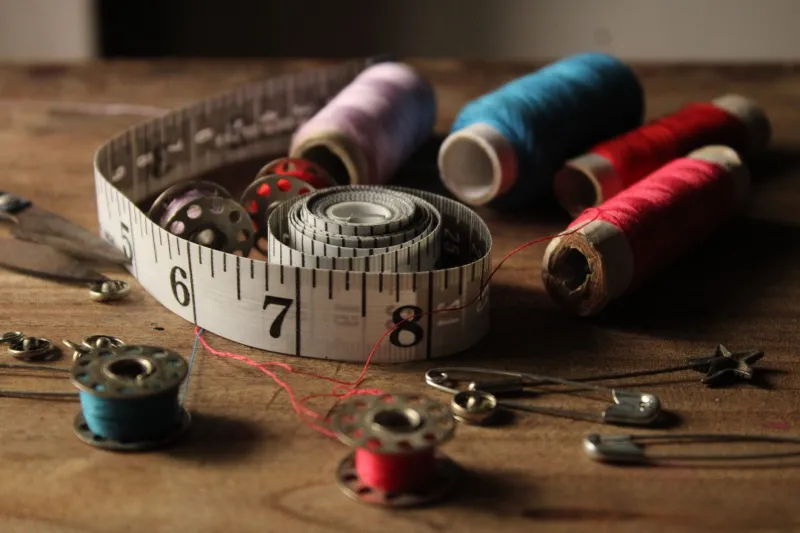
- A repair kit: safety pins, a needle already threaded, a lint roller, and a couple of baby wipes for the inevitable glitter situation.
What doesn't go in: anything that needs dry cleaning, anything with a scratchy neck that has already been rejected twice at home, and anything that only fits if the child stands very still and holds their breath.
Don't Just Export the Dregs
The temptation, once the box exists, is to treat it as a retirement home for costumes that have lost favour. Resist. A satellite stash stocked with rejects is just a second disappointment, and children are quick to notice that Grandma's cupboard is where the rubbish costumes went.
A better method: keep a short list taped to the inside of the lid — sizes, contents, and the date it was last checked. Twice a year, in the October half term and again in early summer, swap one or two items back into the main box at home. Rotation does more for a stash than addition ever will.
Sizing Without a Crystal Ball
The stash is worst when it's the right size for a child who is now eight centimetres taller. Keep it simple: one outfit that fits this week, one that will fit by spring, and nothing in between. Elastic waists, Velcro tabards, tie-on capes and apron-style tunics all survive a growth spurt better than anything with a fixed fastening.
A Small Festive Capsule for 2026
With the 2026 festive season approaching, it's worth giving the box a fifteen-minute review before the December school run starts in earnest. A few well-chosen additions cover most of what the diary throws up:
- Christmas jumper day — a red or green base layer and a piece of tinsel do the job, and both live happily in the tin.
- A nativity or carol-service outfit, if the child's school is the sort to send a letter home in late November asking for a shepherd.
- New Year's Eve — a sparkly top or a party dress, ideally one that can go over thermals.
- A Santa hat and a set of reindeer antlers, which are the two most borrowed items in any dressing-up collection and the two most likely to be missing at the crucial moment.
That's it. The festive capsule doesn't need to be a whole Christmas shop; it needs to be enough to stop a 9pm panic in a supermarket car park.
The Maintenance Loop
A stash that isn't checked becomes a stash that isn't used. The maintenance is genuinely small: everything goes back in clean and dry, costumes with a washable label get a cool wash after each outing, and anything that comes home glittered gets shaken out over the bin before it goes in the box. Keep a spare peg and a couple of large zip bags inside the lid for the items that arrive damp from a puddle-based game.
The Conversation That Makes It Work
Finally, tell the grandparents what the box is for. Not so they can run a costume service, but so they know it exists, where it lives, and that it is entirely acceptable to produce a pirate hat at 7.30am on a Sunday if the situation requires it. Nine times out of ten, that's the part they enjoy most — and it makes the spare room earn its keep in a way that a spare duvet never quite does.